
Visiting London for the first time? As a born and bred Londoner, I know all the important information you’ll need about visiting this amazing city. So, I’ve put together this ultimate first-timer’s guide to London! This guide will cover how to get to London from each of the 6 London airports as well as international and domestic trains, where to stay in London for the first time, top things to do in London for the first time, top tips for visiting London, important information to know, the best time to visit, and how to get around the city!
In a Rush? Here Are My Best Picks for Where to Stay in London, England
⭐️⭐️⭐️ Sea Containers – Check here for rates & availability
⭐️⭐️ St Martins Lane Hotel – Click here for rates & availability
⭐️ The Pilgrm – Click here for rates & availability
How to get to London
There are 6 main London airports: Heathrow, Stansted, Gatwick, City, Luton and Southend. And although they all have “London” in their name, only two out of six airports (Heathrow and City) are actually located in London. So it’s important to decide and arrange your airport transfer in advance (whether private or public transport) for a smooth start to your visit to London for the first time!
Here is a breakdown of all the ways you can get to central London from each of London’s airports, including private transfers and public transport options!
From London Heathrow Airport
Heathrow is the big boss of London’s airports. It’s the largest and main international airport serving the city. As you can imagine, arriving at Heathrow can be overwhelming, so it’s essential to have a solid plan for how you’ll get to London from there. The easiest way is to book a private airport transfer.
In terms of public transport, you can take the Heathrow Express, the Elizabeth Line Train, the Tube, or a coach. Here’s a breakdown of where each of these can take you:
- Heathrow Express – This will take you to Paddington Station in 15 minutes!
- Elizabeth Line – This will take you to Paddington Station within 28 minutes and to Liverpool Street Station within 40 minutes. If you’re staying near the Soho area, it can also take you to Tottenham Court Road Station within 30 minutes!
- Piccadilly Line – As this is a London Underground (Tube) line with stops in local areas, this will take you to central London within 50 minutes to an hour. I always take the Piccadilly Line when travelling to and from London because it’s the cheapest option (and it’s the most convenient as I actually live on the Piccadilly Line too)!
- Bus – This will take you to Victoria Coach Station in around 50 minutes to an hour.
From London Stansted Airport
London Stansted Airport is located in Essex, northeast of London. But getting to London from Stansted is very easy. The easiest way is to book a private taxi. But if you’d rather use public or shared transport, there are a few ways you can go about it:
- Stansted Express – This will take you to Liverpool Street station in about an hour.
- Bus – I’d highly recommend taking a National Express bus to get into London from Stansted, as they offer various services to different places in London. For example, the A6 bus can take you to Paddington Station or the Victoria Rail and Coach Stations, the A8 can take you to Liverpool Street Station or the Victoria Rail and Coach Stations, and the A9 can take you to Liverpool Street Station.
From London Gatwick Airport
Gatwick Airport is located in Crawley, south of London. The easiest transfer option is to book a private taxi. However, getting to London from Gatwick is also pretty simple (and way cheaper) with public transport:
- Gatwick Express – This will take you to Victoria Rail Station within 30 minutes
- National Rail – Both the Thameslink and Southern Rail trains will take you to King’s Cross or Victoria Station within 1.5 hours.
- Coach – The National Express coach can take you to Victoria Coach Station in 1.5 hours, give or take.
From London City Airport
London City Airport is the easiest and most accessible airport in London because it’s located just 6 miles east of central London! If you’re visiting London from the major cities across Europe, there’s a chance you could be arriving at London City Airport.
You can always get a private taxi from City Airport to your accommodation in London. But you can also get the Docklands Light Railway (DLR), which connects to central London and other Transport for London (TFL) tube and rail lines such as the Jubilee, District, Central and Elizabeth Lines.
From London Luton Airport
London Luton Airport is in Luton, a town located north of London. Similarly to all the other London airports, the easiest way to get to London from here is to book a private taxi. However, if you prefer to use shared or public transport, the best options are:
- Coach – This will take you from Luton Airport to London Victoria Coach Station in about one hour.
- Thameslink train – If you’d rather take the train, you’ll have to first get the Luton DART train from Luton Airport to Luton Airport Parkway. Afterwards, take the Thameslink train to St Pancras International. When booking your ticket, make sure to put your destination as leaving from Luton Airport (not Luton Airport Parkway) so that your DART transfer is included in your ticket!
From London Southend Airport
London Southend Airport is on the outskirts of Southend-on-Sea, a coastal city located east of London. As with the other London airports, you can book a private transfer from Southend Airport to London.
The public and shared transport options from Southend to London are limited. There are no direct coaches that can take you to London. But there are direct trains. The Greater Anglia train can take you to Stratford Station in 50 minutes, to Liverpool Street Station in an hour and to King’s Cross Station in 1.5 hours.
From Stratford, Liverpool Street and King’s Cross, you can reach other parts of London via the Tube, Elizabeth Line or London Overground.
Eurostar
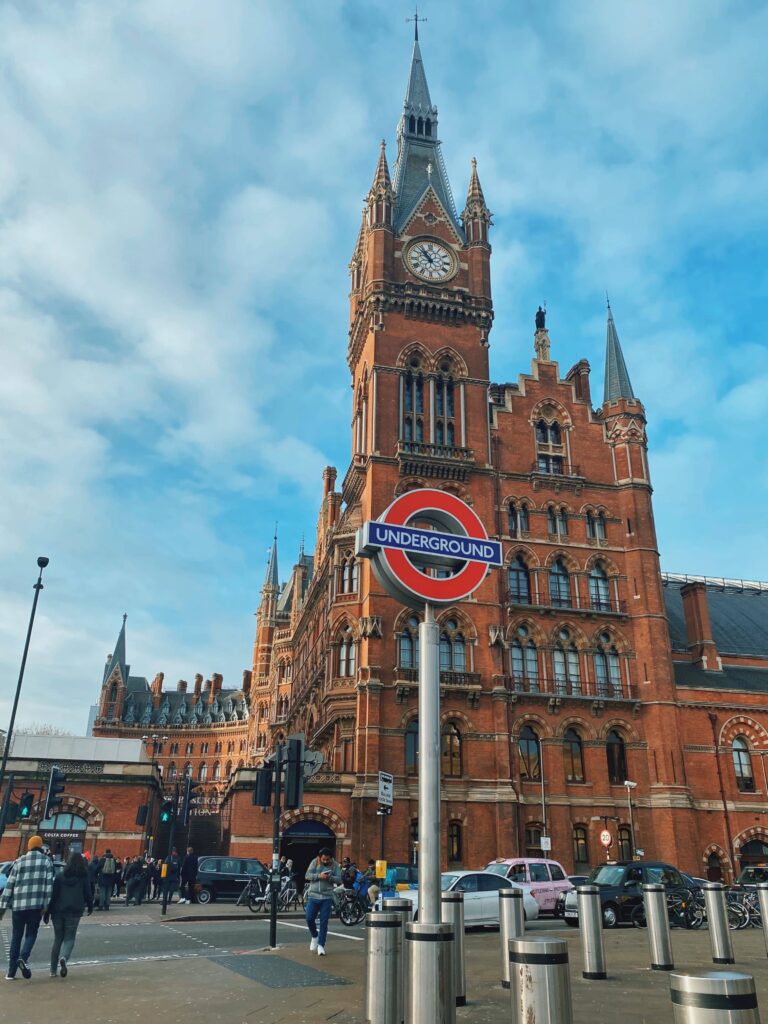
If you’re based in Paris, Brussels, Rotterdam or Amsterdam, you also have the option to take a direct Eurostar train to London! You’ll arrive at St Pancras International Station, which has easy connections to other parts of London via public transport.
Domestic Trains
Since London is the capital, it’s very easy to get there from other parts of the UK. There are many direct domestic trains to London from the major UK cities like Edinburgh, Manchester and Birmingham. I always use Trip.com to book trains and would highly recommend it!
Where to Stay in London for the First Time
Picking where to stay in London for the first time can be overwhelming, especially because tons of neighbourhoods in the city offer something different. But as a born and bred Londoner, I would say that the best places to stay in London for the first time are tied between 3 areas: South Bank, the West End and Paddington.
I have a complete guide going over where to stay in London for the first time, including the best hotels to stay in South Bank, the West End and Paddington, that you can check out here! Otherwise, stick around for a quick rundown of these areas and why they’re the best to stay in for first-time London visitors.
South Bank
South Bank is the place to stay if you’re into all the touristy stuff. The London Eye, Big Ben, Westminster Abbey, the National Theatre and Tate Modern are all within walking distance. So, because South Bank is close to these tourist attractions, expect most hotels in the area to be pricey.

My top hotel recommendation in South Bank is Sea Containers London. It’s a unique, cruise-ship-inspired 5-star hotel overlooking the River Thames and St Paul’s. They offer luxe amenities like a rooftop lounge and bar and also offer free wifi and breakfast!
Otherwise, you can browse some more hotels in Southbank using the map below!
West End
If you prefer your first-time stay in London to be surrounded by social, local, and nightlife, then the West End is the perfect area to pick. This consists of Soho, Leicester Square, and Covent Garden.
The best thing about the West End is that it’s London’s entertainment and cultural hub. They have Trafalgar Square, the West End theatres, Chinatown, Piccadilly Circus and Oxford Street all within walking distance! And best of all, the West End has very easy and quick connections to other areas of London via public transport!
When staying in the West End, it’s important to stay in a hotel that can truly help you relax and zone out the loud noises of the area. This is why my top hotel recommendation for the West End is Zedwell in Piccadilly Circus. This is a minimalist hotel with rooms designed to promote sleep, positive health and wellbeing — all very necessary when staying in London’s most popular district!
Additionally, Zedwell is only a minute walk from Piccadilly Circus Underground Station, which provides direct transport to and from Heathrow Airport via the Piccadilly Line!
Alternatively, you can browse some more hotels in the West End using the map below!
Paddington
Paddington is the perfect area to stay in London for the first time if you want to stay near central London without being too overwhelmed by the busyness of the city. Because it’s further out from central London, it’s also perfect if you’re on a budget!
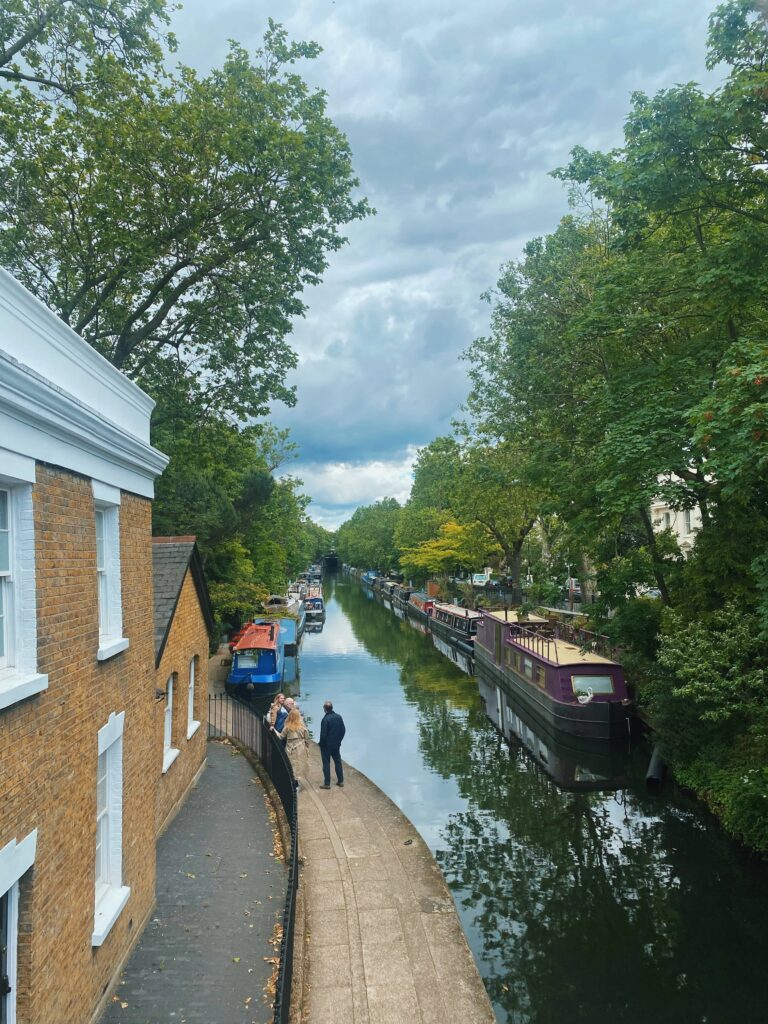
My top hotel recommendation for Paddington would be The Pilgrm Hotel Restaurant and Bar. It’s a lovely hotel with stylish rooms, a cafe and a lounge! It’s only a 3-minute walk away from Paddington Station, which provides fast and direct transport to and from Heathrow Airport via the Elizabeth Line!
The Pilgrim is also close to Little Venice as well as Notting Hill, famous for its colourful houses and Portobello Road Market!
Otherwise, you can browse some more hotels in Paddington using in the map below!
Top Things to Do for Your First Time Visit to London
London has endless landmarks and attractions to see. So much so that I have a full guide on bucket list things to do in London (coming soon!). But below is the list of the top things to do and see when visiting London for the first time.
Tower of London

The Tower of London is London’s royal fortress, an iconic landmark in the city. Out of all the landmarks in London, I definitely think that the Tower of London is the most fascinating. It takes about 2-3 hours to see everything (but in all honesty, you could spend the whole day here if you wanted to), and there is a lot to see.
Of course, you’ll get to see the Crown Jewels, but there are some other parts of the Tower to explore too. This includes the White Tower (and the historic armour of the line of kings of the UK), St John’s Chapel, the ravens that protect the Tower, the guards (Beefeaters), the Bloody Tower, the fortress, the Fusilier Museum and Tower Green.
When visiting the Tower of London, give yourself plenty of time to explore it all! You can also make a day trip out of it by visiting other nearby spots afterwards, such as Tower Bridge!
Tower Bridge
Next to the Tower of London is Tower Bridge, the iconic bascule bridge that often gets mistaken for London Bridge! This bridge lifts around 800 times a year, and you can also walk on it for free!
There’s also the option to go up the towers on the bridge and cross them for an extra fee. You’ll walk across the Glass Floors, see unique views of the Thames River, and visit the Victorian Engine Rooms that powered the Bridge Lift for 80 years.
Changing of the Guards at Buckingham Palace

Buckingham Palace is the working residence of the British Monarch. Although it’s very unlikely that you will see the King of England here, you’re guaranteed to see the changing of the guards.
This ceremony happens every Monday, Wednesday, Friday, and Sunday, where the King’s guards hand over responsibility for guarding the Palace to new guards. And best of all, it’s completely free to watch! Check out the official schedule for the changing of the guards and make sure to arrive early to get the best view!
If you fancy a more in-depth look inside Buckingham Palace and this ceremony, including British royal family history, then a Buckingham Palace & Changing of the Guard Tour will be perfect for you!
London Eye
The London Eye is one of the most popular landmarks in London, standing 135m tall and providing 360 views of the city for 30 minutes! On the London Eye, you can spot many of London’s other landmarks such as Buckingham Palace, Big Ben, St Paul’s Cathedral and The Shard!
Since it’s a really popular attraction, it’s best to book your tickets in advance instead of buying your tickets when you get there. You can opt for the standard London Eye entry ticket, or if you’re feeling bougie, you can book the London Eye Champagne experience.
Free London Viewing Platforms

If you don’t fancy visiting the London Eye, there are many other viewing platforms where you can see views of London too. And these are free!
The most popular one is Sky Garden, London’s highest public garden offering 360 views of the city. It’s completely free to visit; however, you will need to secure a free ticket from their website about 3 weeks in advance. However, due to its popularity, you may find it difficult to book tickets.
Alternatively, you can visit The Garden at 120, which is across the road from Sky Garden. It’s London’s biggest rooftop terrace, also providing 360 views of the city. But the best part is that they accept walk-ins, so no pre-booked ticket is needed!
If you’re unsure which one to visit, I also have a Sky Garden and The Garden at 120 guide (coming soon!), which could help you decide which one to visit! Otherwise, there are other free viewing platforms to visit, including Horizon 22, The Lookout and One New Change!
Greenwich Observatory
The Greenwich Observatory is the home of time. If you’ve ever heard of Greenwich Mean Time, this is where it comes from! Greenwich became the official timekeeper, where the Prime Meridian was established to become the reference point for all the other world time zones.
At the Greenwich Observatory, you’ll not only be able to walk on the Prime Meridian but also see where scientists mapped the stars and learn more about iconic scientists and inventors such as Isaac Newton!
Notting Hill
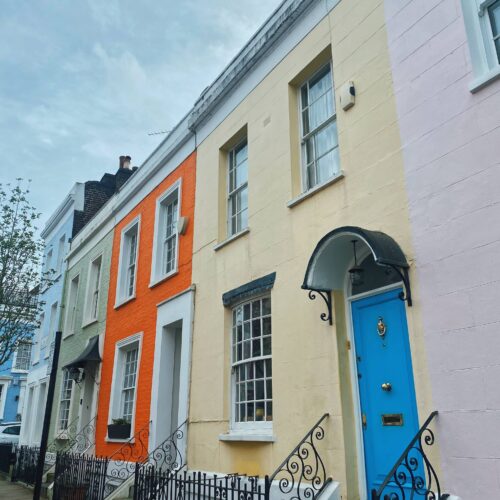
You might have heard about Notting Hill from the movie starring Julia Roberts and Hugh Grant. Not only can you visit the filming locations here, including the Notting Hill Bookshop, but there are many other beautiful areas in Notting Hill to visit.
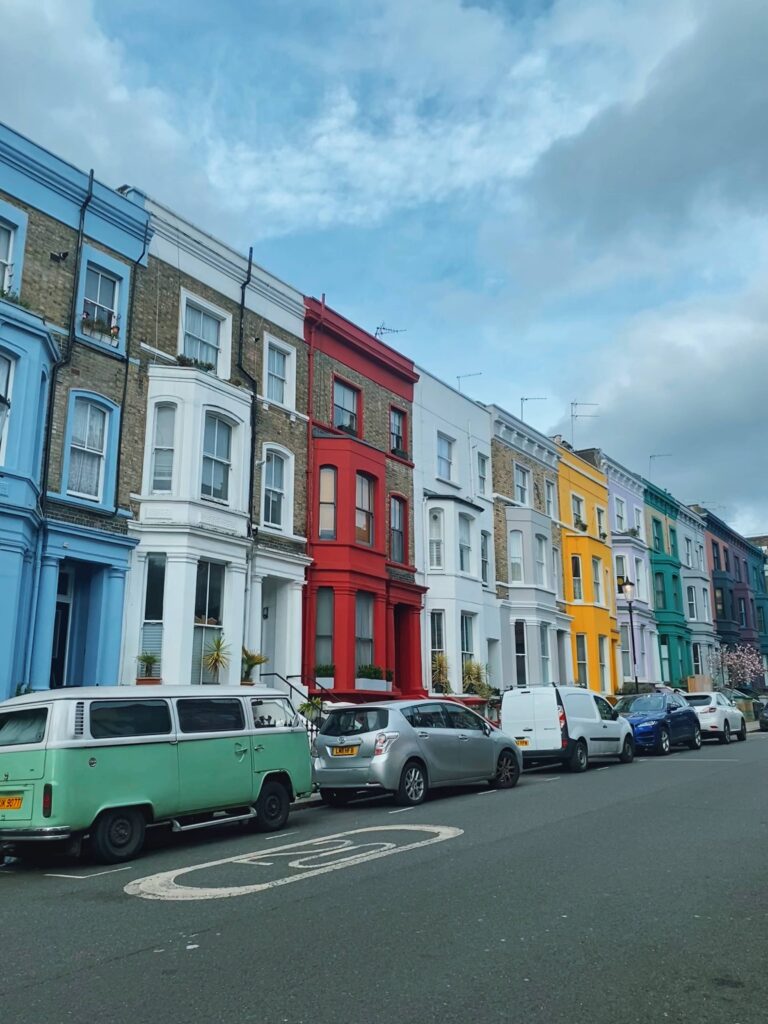

Notting Hill is famous for its beautiful colorful houses and the iconic Portobello Road Market offering vintage and antique items. Nearby, you can also visit Holland Park and Kyoto Garden to escape the noisiness of the city. If you’re visiting London in the summer, there’s also the Notting Hill Carnival, one of the biggest carnivals in the city, celebrating Caribbean culture!
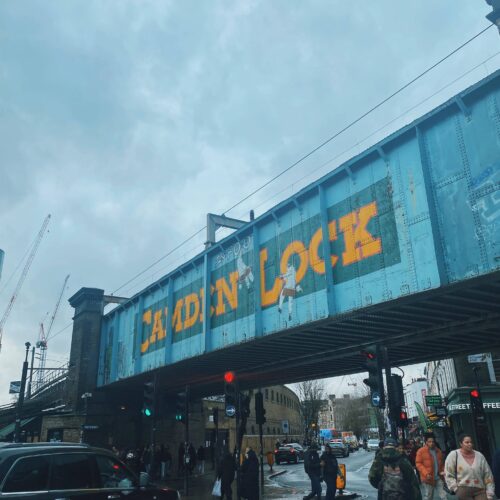
Camden Town
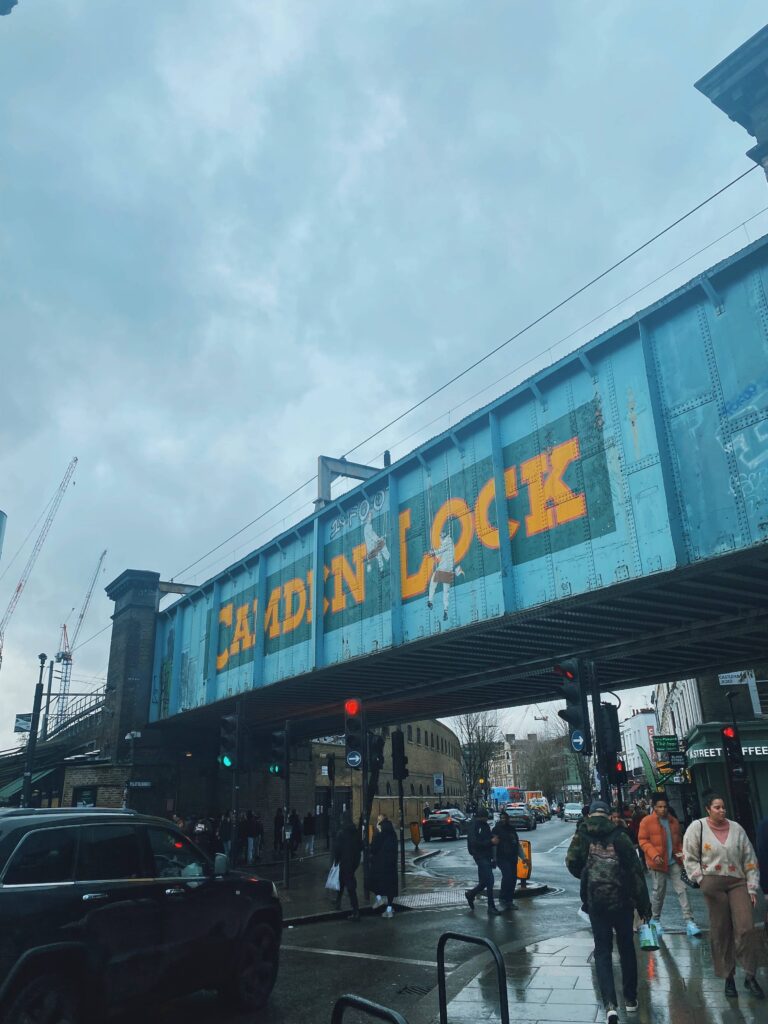
Camden Town is home to the famous Camden Market. If you’re looking for authentic street food ranging from Thai to Italian food, you’ll find it here! You’ll also find cool vintage, jewellery, and accessory shops.
There are tons of other cool things to do in Camden Town too, including visiting the famous EDM Culture store, Cyberdog, the Amy Winehouse statue, admiring the street art, and going on a walk along Regent’s Canal, which leads to Regent’s Park, ZSL London Zoo, and Little Venice near Paddington!
Top Tips for Visiting London for the First Time
Explore by Area/Borough
London may look small on a map, but it really is a big city! So unless you’re planning a long-term visit, it’s gonna be impossible to see everything in London. My best advice for visiting London for the first time is to explore the city by area or borough.
The best way to do this is to pick an attraction in London to visit each day and explore the surrounding area. For example, if you want to visit Buckingham Palace, explore the surrounding area (City of Westminster Borough) where you can also visit Westminster Abbey, Trafalgar Square, Hyde Park and the Natural History Museum.

Or if you’re visiting St Paul’s Cathedral, explore the surrounding areas such as the Barbican, Millennium Bridge, Tate Modern Gallery and Liverpool Street.
Exploring London this way will avoid overloading your days, allowing you to chill and take some time to rest. Plus, exploring London by area or borough can give you the local London life experience!
Take Advantage of Free Attractions
London is expensive, but the number of free attractions the city has lowkey compensates for it. When visiting London, please make sure to take advantage of the free attractions, because they are genuinely amazing! But also keep in mind that some attractions may need you to pre-book your entry.
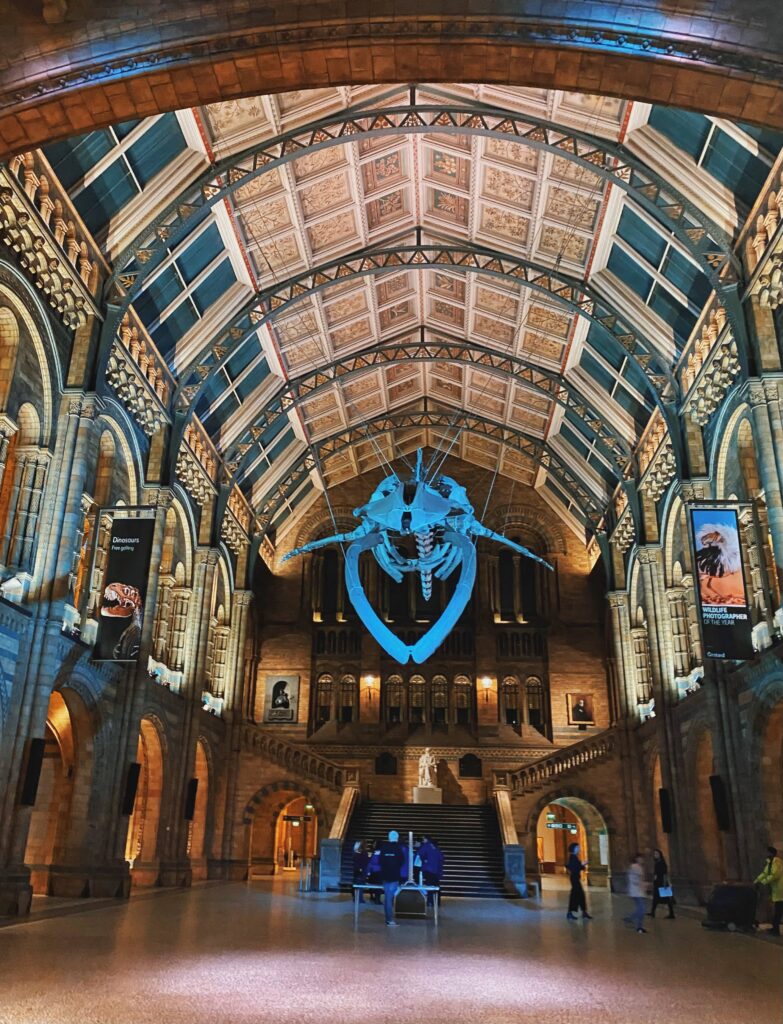
I have a full blog post on 25 free things to do near London Bridge (coming soon!), and I’ve previously mentioned London’s free viewing platforms. But there are way more free attractions in London you can visit too! Here’s a list of a few below:
- National History Museum
- Victoria and Albert Museum (V&A)
- Young V&A
- National Gallery
- London’s Royal Parks (Hyde Park, Kensington Gardens, Richmond Park, Bushy Park, Green Park, St James’s Park, Regent’s Park & Primrose Hill, Greenwich Park)
- Imperial War Museum
- Royal Academy of Arts
- Wallace Collection
- Whitechapel Gallery
- Abbey Road
- Epping Forest
- Wellcome Collection
- Brick Lane
- Brown Hart Gardens
- City Farms (Vauxhall, Kentish Town and Freightliners Farm in Islington)
- God’s Own Junkyard
- Graffiti Tunnel on Leake Street
- Brompton Cemetery
- Sir John Soane’s Museum
- British Library
- Petrie Museum of Egyptian Archaeology
Avoid Tourist Attractions on Weekends
London is at its busiest on the weekends. It’s when people are off from work, and kids aren’t in school, so trust that you’ll see an abundance of people outside, both locals and tourists.
So, I’d advise you to avoid tourist attractions on the weekends (yes, that includes Sundays too). You’ll find large crowds on the weekends, which can be very overwhelming, and waiting times for anywhere are no joke. So instead, take the weekend as a travel reset day where you can relax. Or you can do a fun activity or visit somewhere that’s not a popular tourist attraction.
Book Restaurants in Advance
It’s quite rare for London restaurants to take walk-ins these days. So to make sure that you’ve got a secure table for a restaurant or brunch place, make sure to book a reservation in advance online.
Take Advantage of Discount Apps
Booking restaurants in advance is the perfect segue for discussing helpful apps to use in London. If you want to save a bit of money when going to some London restaurants, you can download the First Table app to book a restaurant table and get up to 50% off your food bill for up to 4 people!
There are various other discount apps like this too that can help you save some money when visiting London. For example, Groupon and Wowcher have tons of shopping deals, restaurants and activities in London that you can book at a discount. Or if you fancy a drink at a pub or bar, Dusk will help you discover cool spots to visit and claim a free drink!
Make Use of Public Transport
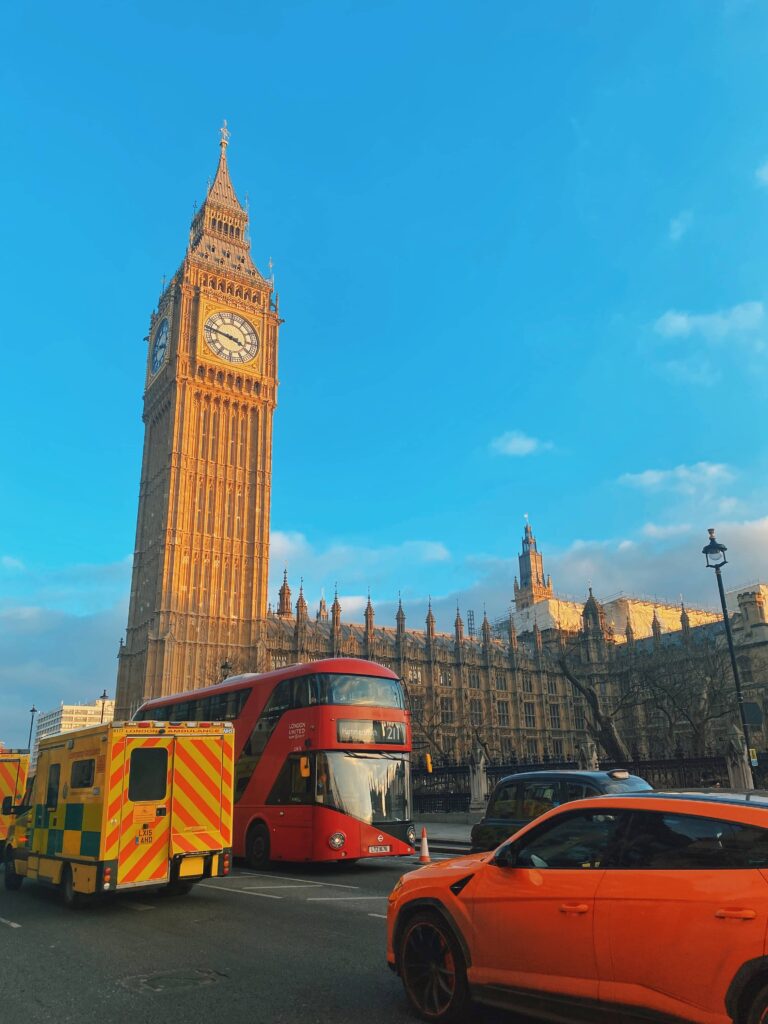
One thing you’ll realise about London is how advanced the public transport system is. The tube and bus systems here are some of the best in the world, so it would be silly to take Ubers around the city.
So, make use of the Tube and buses when visiting London. The bus system is very easy to navigate, but if you’re intimidated by the London Underground, then don’t worry, I’ve got you! I have a full guide on how to use the London Underground (coming soon!), including understanding the Tube lines, zone areas, fares, and top tips for navigating it!
Otherwise, you can head to the “How to Get Around London” section of this guide for a brief rundown on using London’s public transport.
Be Prepared for Bad Weather
You can never truly trust the weather app to tell you what the weather will be in London. Sometimes it’ll say it’s clear skies with no rain, and when you step outside, it’ll be cloudy and rainy. Even in the summer, there’s a chance that you’ll experience slightly chilly weather and rainy days.
A year or 2 ago in June, it was raining for a good few days, and I was made to wear a puffer jacket! So, make sure to prepare for bad weather by packing an umbrella and a raincoat with you.
Be Careful of Pickpocketing
Pickpocketing has always been a thing in every major city around the world. But recently in London, there has been a rise in pickpocketing crimes on the London Underground and cell phone snatching in London’s popular streets.
This isn’t to scare you, but to make you aware of what could happen if you’re not careful with your valuable possessions in London. The best way to avoid pickpocketing is to not put your phone in your back pocket and to keep your bag close to you, where you can see it at all times. To avoid cell phone snatching, don’t walk while texting or scrolling, especially near the edge of the sidewalk and when crossing the street.
Things to Know Before Visiting London for the First Time
Getting a Visa to Visit London
If you’re a citizen anywhere outside of the UK and Ireland, then you’ll need to apply for either a Standard Visitor visa or an electronic travel authorisation (ETA) to visit the UK.
The one you’ll need to apply for depends on your nationality. For example, if you’re an EU, Canadian, Australian or American citizen, then you’ll only need an ETA. If you’re not any of the nationalities mentioned, it’s worth checking if you need to apply for an ETA or Standard Visitor Visa on the official UK government website.
London Neighbourhoods
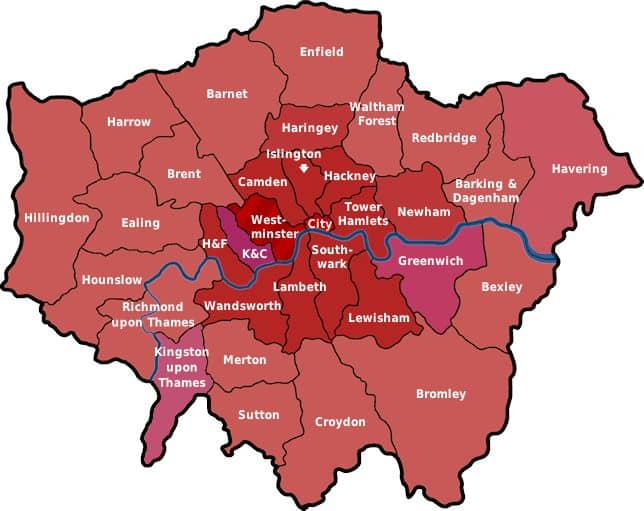
London is split up into 32 districts called boroughs, and each borough has various neighbourhoods within it. You won’t need to know all of these boroughs, but when deciding what to put on your itinerary, it’s helpful to know how far you’ll need to travel.
Below is a map of the different London boroughs, with inner London indicated in dark red.
Language, Slang & Pronunciations
London is a very culturally diverse city, with the majority of Londoners speaking English. However, there are a few slang terms and pronunciations of words that are worth knowing to understand what Londoners are saying and to help navigate certain areas.
First, here are some London (and general British) slang terms you might hear often during your visit:
- Loo = toilet
- Quid = British Pounds (e.g., 1 quid is £1)
- Fiver = £5 (or tenner = £10)
- Ps = money
- Queue = line
- Pavement = sidewalk
- Chips = fries
- P/Leng = attractive person
- Bait = obvious
- Creps = trainers/sneakers
- Fag = cigarette
Some places in London aren’t pronounced like how they’re written too. So here is a list of a few places in London and their correct pronunciations for reference:
- Thames River = Tems River
- Leicester Square = Less-ter Square
- Gloucester Road = Glos-ter Road
- Tottenham = Tot-nam
- Holborn = Hoe-bon
- Greenwich = Gren-itch (Woolich = Wool-itch, Dulwich = Dul-itch)
- Marylebone = Mar-li-bone
- South Quay = South key
- Southwark = Suh-vuk
Currency
Although the UK is in Europe, the currency isn’t the Euro. The UK’s currency is the British Pound (GBP, £), also known as the pound sterling (or just pound). It’s very rare to find places in London that accept other forms of currency, even Scottish banknotes, despite them being the same pound sterling currency!
Cash vs Card
Card is king in London. This is why I always suggest bringing a card with you when visiting for the first time. You won’t need to exchange cash when visiting London, and in most cases, it’s completely unnecessary to do so.
You can pay for everything with a card here, with some places being completely cashless! So when visiting London, I’d highly recommend bringing a bank card with no to low exchange fees!
Plug Adapter
London and the rest of the UK use the Type G plug, which looks like three rectangular pins in a triangle pattern. This plug type is also used in Ireland, Malta, Cyprus, Singapore and Malaysia!
Local SIM Cards
When visiting London for a short period of time, I recommend getting a pay-as-you-go SIM card which provides data, minutes and texts with no strings attached.
You can get these in any phone shop or grocery store or even online. My specific recommendation is the pay-as-you-go Giffgaff SIM card, where you can find really good deals for the amount of data you can get!
If your phone doesn’t have a SIM port, then the alternative option is to get an eSIM. I highly recommend using Saily for your eSIM as they have great eSIM deals for UK travel!
Tipping Culture
For most restaurants in London, a discretionary service charge of 10-15% will be automatically added to your bill. For some restaurants, this service charge goes directly to your server, and for others, this service charge gets shared with the staff. So it’s worth asking if you want your tip to go directly to your server.
For restaurants, bars and pubs, a 10-15% cash tip isn’t essential, but it’s always appreciated, especially if a service charge hasn’t been added to your bill.
Common Scams in London
When visiting London for the first time, it’s important to know common scams to avoid! Here’s a small list of the top 3 scams you’re likely to encounter:
- Fake charity collectors – You’ll most likely see fake charity collectors at major Tube stations, asking you to donate to their cause. Ideally, you’d want to completely avoid them; however, if they persist, make sure to ask about valid charity registration. If they can’t provide that, then you’ll know they’re scammers.
- Cup and ball – This is a common street game scam that you’ll find in central London, especially on Westminster Bridge. This is where someone will hide a ball under a cup along with 2 other cups, move them around, and challenge you to guess where the ball is to win money. They normally use a pawn to successfully guess the right cup, enticing passersby to join in, gamble their money, and lose.
- Fake theatre tickets – If anyone is trying to sell you theatre tickets in popular areas (Piccadilly Circus, West End, etc), chances are, they’re fake tickets. The only valid places you should get theatre tickets in London are on official websites such as TodayTix or at official box offices.
Best Time to Visit London for the First Time
London weather is very unpredictable, and on top of that, tons of tourists visit the city literally all year round. So when it comes to the question of when is the best time to visit London for the first time, the answer isn’t quite simple.
However, my best recommendation is to visit London in the spring and early summer (May-June). It can be rainy, but sunrise happens earlier, and sunset can be as late as 9 pm, allowing you to enjoy London in most of the daytime. Plus, visiting London in May-June means you’ll avoid the humid summer heatwaves and the largest crowds due to the school summer holidays.
My other recommendation would be to visit London during the festive season (November – December). Christmas in London is very magical, and there are so many different fun and festive activities to do and things to see! IF you’re visiting London during this time, check out my ultimate guide to spending Christmas in London (coming soon)!
How to Get Around London
Public Transport & How to Pay For It
Public transport in London is very quick and easy to use. The main modes of transport in London are the Tube and bus. There are various ways to pay for them depending on your circumstances and how long you’ll be staying in London.
Paying With a London Travelcard
Travelcards give you unlimited travel on all of London’s public transport (the Tube, the buses, London Overground, Elizabeth Line and DLR) for 1, 2 or 3 days. This is perfect if you’re staying in London for a few days and using public transport frequently to get to all the places you want to see.
You can buy a travel card from the ticket machines or offices in any of London’s Tube, Overground, Elizabeth Line, or National Rail stations. It’s worth noting that if you choose the zone 1-6 option, you can use the same travel card to get to and from Heathrow Airport via the Piccadilly Line or Elizabeth Line!
Paying With Contactless
Contactless is a pay-as-you-go method for travelling anywhere in London. You just use your debit or credit card to tap in and out on the yellow card readers of the tube barriers or bus entrances, and TFL will automatically charge your fare.
This is best to use if you’re not visiting London for long and if you have a debit or credit card that doesn’t charge you fees for spending abroad.
It’s very important to note that although you can use Apple Pay as your contactless option on the tube, don’t tap in and out with different devices, even if it’s the same card you’re using.
For example, if you tap in with your MasterCard on your iPhone, don’t tap out with the same MasterCard on your Apple Watch or your physical card. This is because TFL will record these two devices as a separate, incomplete journey, so they’ll charge you more for your fare.
This also applies when using buses in London. Although the Hopper Fare allows you to take unlimited bus journeys for £1.75 within an hour of tapping in on the first bus, you must use the same card and payment method to benefit from it.
Paying With an Oyster Card
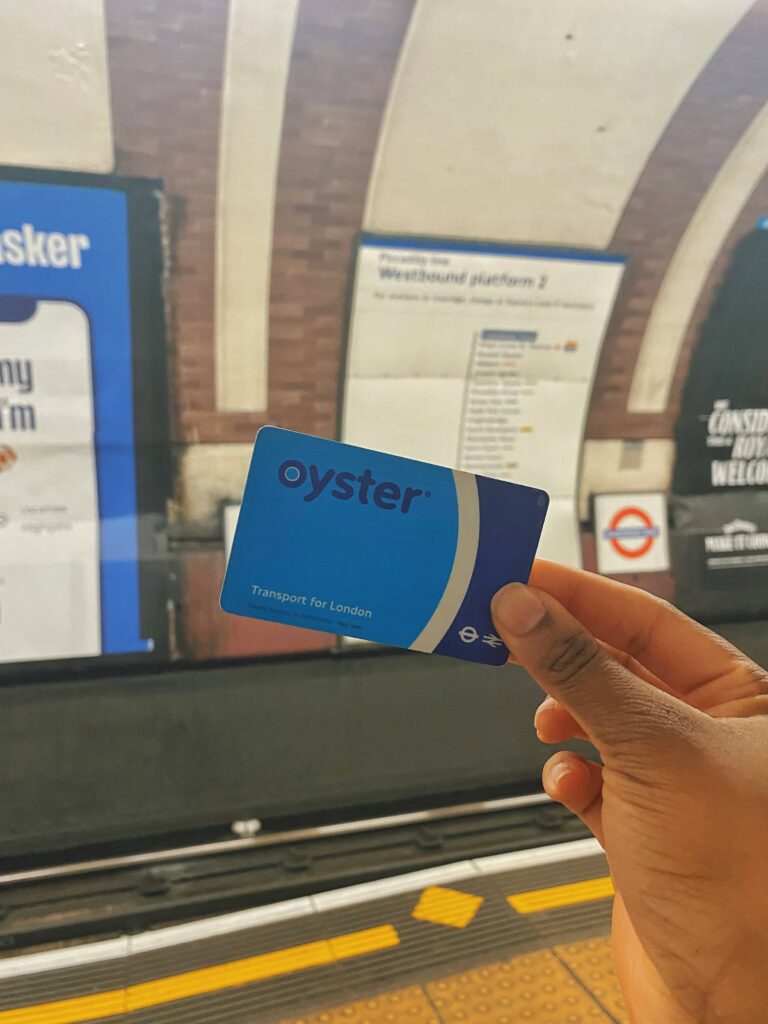
Oyster Cards are plastic smartcards that you can use to travel anywhere in London. This is best to use if you’re staying in London for a week (or more) or if you have a debit/credit card that charges fees when spending abroad.
You can buy an Oyster Card for £10.50 at any Tube or Overground station, at Visitor Centres or at any Oyster Ticket Shops dotted all over the city.
After buying your Oyster Card, you can add a travel card to it (e.g. travel for a week between zones 1 and 2), or you can top it up (pay as you go) with however much you need for travel when you’re staying in the city.
Getting Around London by Bus
London bus travel is very easy to navigate. Simply find the bus stop you need to start your journey and when your bus is approaching, put your arm out. This will indicate to the driver that you want them to stop and pick you up. This is very important because if you (or anyone else waiting) don’t put your arm out (and passengers aren’t getting off at your stop), the bus will drive right past your bus stop and you’ll miss it.
Once the driver stops for you and opens the bus doors, hop on, tap your choice of payment on the yellow card reader, and sit or stand wherever you desire. Before your stop, make sure to press the red stop buzzer/button to indicate to the driver that you want to get off at the next stop, then hop off the bus!
If you don’t know how to get to your destination, you can plan your journey via the TFL Go or Citymapper app!
Getting Around London by Tube
The Tube network is a little more complicated, especially for a first-time London visitor. Because of this, I have a full guide on how to use the London Underground (coming soon!) and understanding London Underground etiquette (coming soon!) that you can check out!
But the gist of using the Tube is to find the nearest Tube station, tap your choice of payment on the yellow card reader at the ticket barriers, find the correct Tube line platform, get on the Tube, get off at whatever stop you need to, find the exit, and tap out of the ticket barriers.
You can always plan your journey on the TFL Go or Citymapper app if you’re unsure which route to take to your destination!
Bike/Scooter
Alternatively, you can get around London via e-bike or scooter. There are several rental bike and scooter companies that you’ll find all around London. The most common are Santander Cycles (the official bike hire scheme owned by TFL, also known as Boris Bikes) and Lime (for bikes and scooters).
Santander Cycles
Santander e-bikes offer single 30-minute rides from £3 a day with a Day Pass! There are about 800 docking stations for them across London, so you’ll easily find one to hire.
At every docking station, there’s a touchscreen terminal where you can hire your e-bike(s). They’ll ask you to pay with a debit or credit card or Apple Pay, and they’ll print out a release code. Enter this code on the side of the e-bike you want to hire, and you’ll see the light turn green, releasing the e-bike. Then you’re good to go!
An easier and quicker way to hire a Santander e-bike is to download the Santander Cycles app (this will avoid wait times at the docking stations). You can hire an e-bike via the app from your chosen docking station, and your release code will be sent directly to your phone!
Lime
Lime bikes are generally more popular among Londoners, especially young Londoners. There are an estimated over 50,000 Lime e-bikes in the city, so it won’t be difficult to find one to hire. The best thing about Lime is that they hire e-bikes and scooters, unlike Santander Cycles, which only hires e-bikes.
There aren’t any “official” docking stations for Lime e-bikes and scooters, as anyone can leave them anywhere as long as they’re in an authorised zone. But you can find the closest e-bike to you via the Lime app and pay for your hire (which operates on a pay-per-minute model).
Walking
You’ll be surprised by how close everything in London is, despite it being a huge city. As a first-time visitor, you’ll probably be staying in or near central London, where pretty much everything is within walking distance! You can just enter your destination on Google Maps to find the walking route, and you’re good to go!
The Ultimate First-Timer’s Guide to London: Final Thoughts
Anddddd breathe! I hope this first-timer’s guide to London helps you plan your trip to the city with ease! I know it’s a long one, but since London is a big and somewhat complicated city, it’s important to know this information for your first-time visit! If you have any other questions regarding visiting London for the first time, feel free to comment below!
Don’t forget to pin “The Ultimate First-Timer’s Guide to London” for future planning!

Leave a Reply